The Artisan Method.
From careful selection of the island's finest raw materials to a meticulous artisan process built around wholesale supply for high-rotation international gelaterias.
The artisanal production of a Sicilian brioche destined for top-tier HoReCa supply does not accept shortcuts, nor the old industrial bread tricks aimed only at volume.
1. The Basics: Cold Fermentation and Slow Leavening
Looking back at the historical pastry processes from Catania to the monasteries of Palermo, the distinguishing factor is unmistakably the thermal curve applied during the crucial stage of gluten network fermentation.
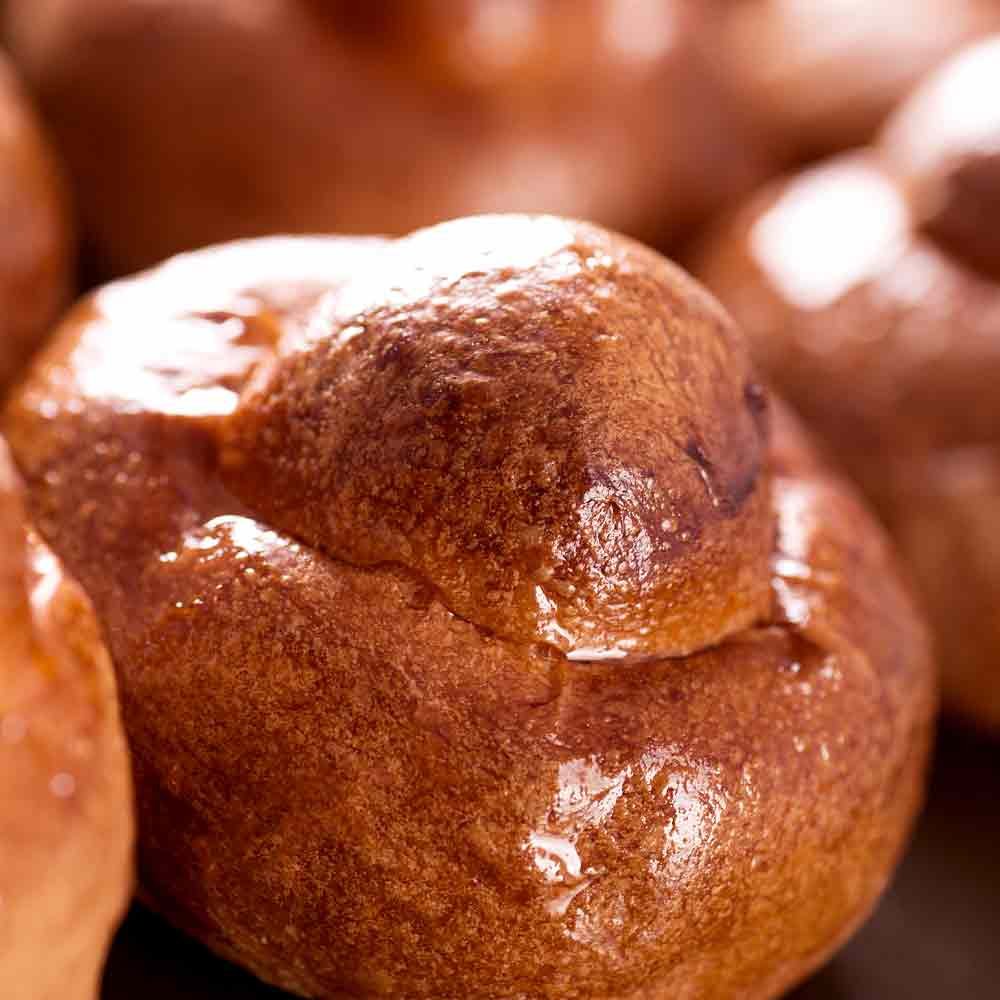
The Sicilus Brioche selection rigorously excludes chemical leavening agents and rapid fermentations. These accelerated methods produce a weak internal structure that collapses on contact with ice cream or softens quickly once sliced. Our dough — made with high-hydration flours and selected fats — matures slowly in a temperature-controlled chamber, building a structure that holds up even under intensive use.
2. Hand-Worked Gluten Network, Intact Pirlatura
The secret of a textbook brioche (a world apart from the automated bun machines of generic competitors) lies in the deep respect for manual pirlatura: that moment when the soft, uniform "ball" forms, allowing the perfect rise of both the base loaf and the delicious "tuppo" on top. The lower body grows with enviable rounded symmetry.
3. Modular Baking
To handle the logistics of wholesale shipping, the bake plays subtly with the Maillard reaction of golden crusts. As soon as the brioche comes out perfectly bronzed, the exclusive advantage of the Sicilus brand kicks in: an immediate ATM-module sealing that locks in all the artisan quality, keeping the original freshness intact for international shipping.